
Reviewed · TOURS
Half-Day Tour ( 4 hours)
Astana hits hard in four hours. This private half-day route strings together Nur-Sultan icons with just enough walking to understand how the city was planned. You get an expert guide plus a mix of driving and short stops, so you’re not stuck in one long vehicle ride.
What I like most is the built-in structure. You start with the Millennium Axis walk, then you finish with photo moments across the city’s centerline logic. I also love that Bayterek Tower has the observation stop baked in, with the admission ticket included.
One thing to consider is ticket cost details for a couple of stops. The opera house and the Mangilik El arch do not include admission, so you may pay extra if you want to go inside.
In This Review
- Key things to know before you go
- Why this Nur-Sultan route works in 4 to 5 hours
- Ak Orda Presidential Palace and the Millennium Axis walk
- Bayterek Tower: the viewpoint stop with the included ticket
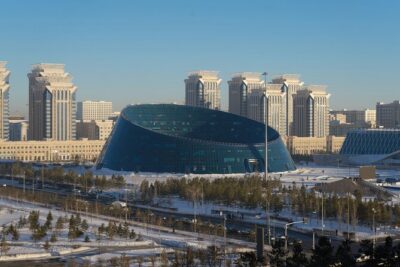
- Khan Shatyr and Norman Foster’s Central Asia tent
- Astana Opera: quick look, separate ticket if you want more
- Hazret Sultan Mosque: inside the biggest mosque in Central Asia
- Main Square, Palace photo orientation, and the Mangilik El arch
- What the private guide experience really changes
- Price and value: what $95 really buys you
- Timing and logistics: how the 4-hour day feels
- What to wear and bring for Nur-Sultan monument days
- Should you book this Nur-Sultan half-day private tour?
Key things to know before you go

- Millennium Axis orientation: You’ll walk the central line named by architect Kisho Kurokawa, not just hop between monuments.
- Bayterek Tower viewpoint: The tower stop includes admission, which saves you time and money.
- Khan Shatyr design stop: Norman Foster’s famous tent structure is part of the route, and it’s easy to photograph.
- Hazret Sultan Mosque interior time: The biggest mosque in Central Asia is on the schedule with free entry.
- Private guide and pickup: You only share the day with your group, with pickup offered and a mobile ticket.
- A tight half-day mix: You’ll see a lot, but it’s still short, so come prepared for quick entrances and photo breaks.
Still choosing? These are other tours in Nur Sultan that we have reviewed.
Why this Nur-Sultan route works in 4 to 5 hours
Nur-Sultan, Kazakhstan’s high-design capital city, can feel like a sci-fi set if you see it without context. This tour helps you read the city fast. Instead of bouncing around randomly, you follow a logical line of planning that ties major landmarks together.
I also like the pacing. The tour runs about 4 to 5 hours, mixing driving with short walks. That matters in a city where the distances are real, but you still want moments where you’re close enough to notice details like scale, materials, and how monuments relate to the streets.
Finally, the price makes more sense when you look at what’s included. You’re paying for a private guide, pickup, and key landmark access, including the Bayterek Tower admission ticket. A few other spots are free, and a couple of indoor entries are not included, which keeps your total cost from ballooning unless you choose extra.
Ak Orda Presidential Palace and the Millennium Axis walk
The day begins near the presidential complex at Ak Orda Presidential Palace. The first major “why is this here” moment is the walk across the Millennium Axis, a central line created in Nur-Sultan’s urban layout. The axis is named by architect Kisho Kurokawa, and walking it changes how you see the city.
This is the kind of stop that can turn a pile of modern buildings into a story. Standing and walking along that axis helps you understand that many monuments are placed with intention, not just built because they looked cool on a postcard. The admission here is listed as free, and the stop includes a comfortable start point before you start moving.
Practical note: since this is a walk right up front, I’d wear shoes you can trust on pavement, especially if the weather is windy or your plans include photos.
Bayterek Tower: the viewpoint stop with the included ticket
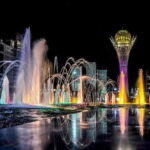
Next comes the landmark that basically defines the skyline: Bayterek Tower. You get about 30 minutes here, and importantly, admission to go up is included.
From the top, the city layout becomes clearer fast. You’re not just looking at a tower, you’re seeing how the different districts spread out, and how the modern capital’s planning shows from above. That “aha” feeling is the point of this stop, and the included ticket means you won’t have to figure out pricing on the spot.
The guide commentary during this time is what makes the viewpoint more than just a camera moment. The tour is built around understanding the history of Astana, and this is where that history can feel visible, because you can trace the city’s geometry with your eyes.
If you’re sensitive to heights or crowds, note that the tower is one of the main attractions. You’ll likely be in a mix of people, but your private guide can help you time your photos and manage the flow.
Khan Shatyr and Norman Foster’s Central Asia tent
After the tower, the route moves to Khan Shatyr, described as the biggest tent in Central Asia and tied to architect Norman Foster. You get another roughly 30 minutes here, with admission listed as free.
This is one of those places where architecture turns into a conversation piece. The tent-like structure is recognizable from photos, but seeing it in person gives you a better sense of scale. You’re also at the end of the Millennium Axis, which quietly brings the whole day’s logic together. You started on the axis, and now you arrive at a destination designed as a focal point.
I like Khan Shatyr because it’s memorable even without going inside every feature. If your priority is skyline and architecture, this stop delivers the “wow” quickly. If you do want extra time inside, you’ll have to manage it within the half-day window.
Astana Opera: quick look, separate ticket if you want more
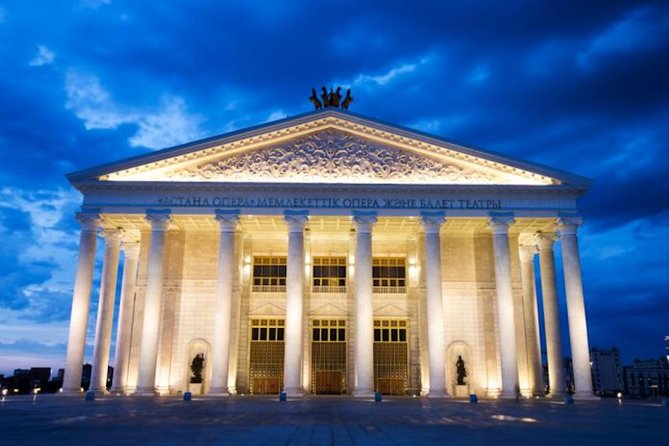
Next is a brief stop at the State Theatre of Opera and Ballet Astana Opera, scheduled for around 15 minutes. Admission is listed as not included.
So treat this as a photo and exterior orientation stop unless you decide you want to pay separately for additional access. The theatre opened in 2013, and the tour notes the opera Birzhan and Sara. It also mentions the theatre’s design ties to Italian Enrico Mor.
Even if you don’t go inside, I think this stop is useful. Modern Nur-Sultan isn’t only about futuristic monuments, it also signals cultural infrastructure, and the theatre is one of the big statements.
Hazret Sultan Mosque: inside the biggest mosque in Central Asia
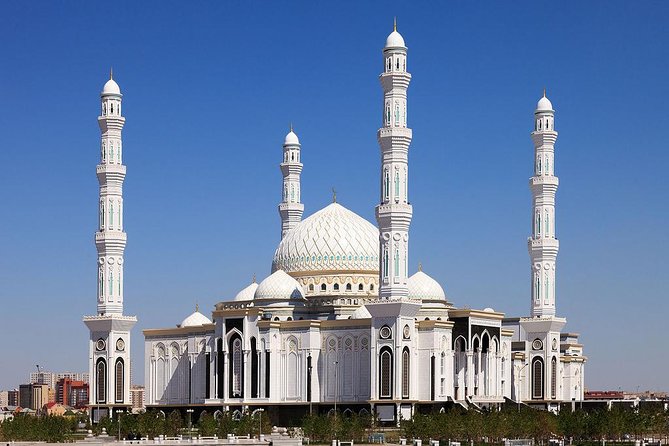
Then you get to one of the most meaningful stops on the route: Hazret Sultan Mosque. The schedule allows about 15 minutes, and admission is listed as free. This is where the tour leans toward cultural understanding, not just sightseeing.
The mosque is described as the biggest mosque in Central Asia, and the key advantage here is that you’re able to see the interior, not only the outside exterior shots. Inside, details like scale, light, and ornamentation tend to hit differently than photos do.
A practical thought: mosque visits work best when you respect dress norms and keep your pace calm. Even with limited time, being mindful makes the experience better for you and for the people there.

Main Square, Palace photo orientation, and the Mangilik El arch
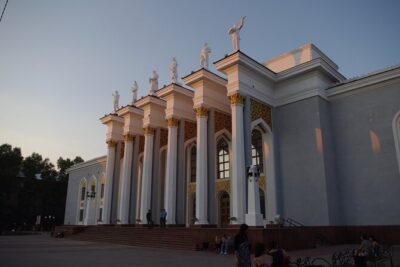
After the mosque, the tour heads to Astana’s main square. You’ll have time for photos and orientation, including a chance to photograph outside the palace complex where the sides are described as oriented to the four sides of the world.
This sounds like a small detail, but it’s exactly the kind of city-planning clue that helps you connect everything you saw earlier. When monuments are aligned in intentional ways, the whole city feels less random, more like a designed system.
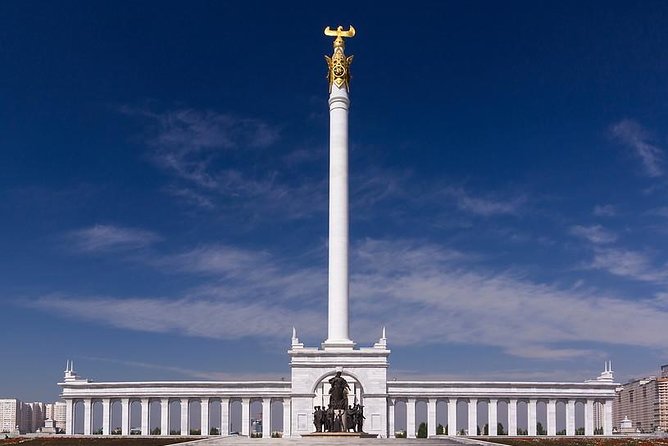
Then you finish with Triumphal Arch Mangilik El, located in the business center, with about 20 minutes on the schedule. Admission is listed as not included, so again you should view this as an exterior stop unless you choose additional access separately.
The arch adds a different mood to the day. After so many landmark-scale structures, the arch feels like a ceremonial marker, a way the city celebrates nation-building themes in a very visible form.
What the private guide experience really changes
This tour’s biggest strength is the guide. The ratings are strong, with an average 4.8 out of 5 from 25 reviews, and the consistent theme is that the guides make the monuments make sense.
I especially noticed the way named guides are praised for insight and friendliness. You might meet Narzerke, praised for interesting construction context, or Dariya, noted for being great along with an accommodating driver. Nargiz is mentioned for pride in culture and strong teaching that helps you explore afterward. Zhanel is described as pleasant, attentive, and informative, with the tour effectively acting as a personal guide and chauffeur setup.
That matters because modern capital landmarks can feel like design objects unless someone connects them to why they exist. On this route, the guide turns the schedule into a guided lesson, from the Millennium Axis planning logic to what the city is communicating through its buildings.
Also, since this is private, you can ask practical questions. Want to know where to grab food after the tour? Want to focus more on viewpoints than museums? Private time makes those choices possible.
Price and value: what $95 really buys you
At $95 per person, this half-day tour is priced like an organized private experience, not a cheap group bus ride. The value becomes clear when you list the “included” pieces:
- Pickup is offered.
- You get a private guide for the day’s length.
- You receive a mobile ticket.
- Bayterek Tower admission is included.
- Several major stops show admission as free, including Ak Orda, Khan Shatyr, and Hazret Sultan Mosque.
- A couple of places are explicitly marked as not included for admission, like Astana Opera and the Mangilik El arch.
So you’re not only paying for transportation. You’re paying for explanation, access where it’s included, and time management across a city where the highlights are spread out.
If you’re traveling solo or as a couple, the private format can be a good deal when you compare it to paying separately for tower admission plus paying for a knowledgeable guide who can explain everything in the same timeframe.
The only “value risk” is simple: if you want a long, slow tour with lots of interior time and museum-style pacing, this schedule is tight. It’s designed for seeing key points and getting context, not for staying for hours in each building.
Timing and logistics: how the 4-hour day feels
Because the tour runs about 4 to 5 hours, you’ll experience Nur-Sultan in bursts. That’s not a bad thing. Short landmark stops keep the day from dragging, and the driving segments prevent you from spending your vacation time hopping between distant icons.
The order of stops also helps. Starting with the Millennium Axis walk gives you your “map in your head.” Bayterek then gives you the bird’s-eye understanding. Khan Shatyr and the mosque add variety, so the day doesn’t feel like one style of monument.
Ending with the main square and Mangilik El arch is a smart closer. Those are easy photo moments and good places to regroup if you’re going to continue exploring afterward.
One extra detail from real experiences: some versions of the day can include small breaks that help you stay comfortable, like tea at a well-known mall during the broader sightseeing time. You should still plan for it to be a fast-moving schedule, not a long sit-down day.
What to wear and bring for Nur-Sultan monument days
Since this is a half-day with walking plus driving, pack for comfort over fashion. I’d bring:
- Comfortable shoes for the short walks, especially at the Millennium Axis.
- A layer for changing indoor and outdoor temperatures, since mosque and tower stops can feel different than the street.
- A camera or phone with a charged battery and enough storage, because you’ll want photos at Bayterek, Khan Shatyr, and the main square.
If you’re planning to enter the opera theatre or spend more time at places that list admission as not included, keep a card handy for on-the-spot decisions.
Should you book this Nur-Sultan half-day private tour?
If this is your first time in Nur-Sultan and you want a fast hit of the city’s most famous modern landmarks with real context, I think this tour is a strong choice. The included Bayterek Tower admission, plus free entry at several major stops, helps justify the price. And the private guide setup with pickup is a big convenience in a city built for planned routes.
I’d skip or reconsider if:
- You want lots of deep interior time at multiple museums and theatres, because the schedule is built for highlights.
- You strongly dislike quick stops and prefer slow pacing.
- You expect every stop to include admission, since some are marked as not included.
For most first-timers, though, this is exactly the kind of tour that helps you understand what you’re seeing, not just where to take photos. Book it early in your trip if you can, so the city makes sense for the rest of your stay.
More Reviewed Tours Around Nur Sultan
- Astana City Tour: Private Full Day with Lunch and Comfort Pickup★ 5.0 · 98 reviews
- Private Half-Day City Tour of Astana in Comfort★ 5.0 · 46 reviews
- Full Day (6 hours) City Tour in Astana★ 3.5 · 22 reviews
- Astana: KarLag and Karaganda – Private USSR history tour★ 5.0 · 21 reviews
- Astana City Tour: Authentic Private Full Day with Lunch + Pickup★ 5.0 · 19 reviews
- Private Yurt Tour with Horses: Immerse into Kazakh Culture★ 5.0 · 16 reviews
What we reviewed in Nur Sultan most recently




Tours, every option.
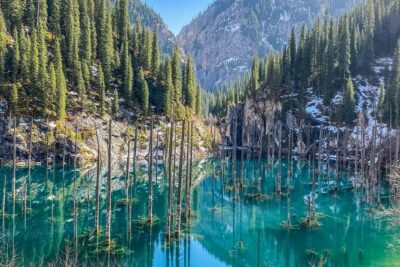 ★ 5.0Kolsai, Kaindy Lakes and Charyn Canyon Small-Group TourFrom $58642 reviews
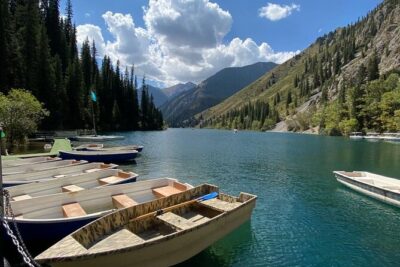 ★ 5.0Kolsai Kaindy Lakes with Charyn Canyons 2-day tourFrom $130392 reviews
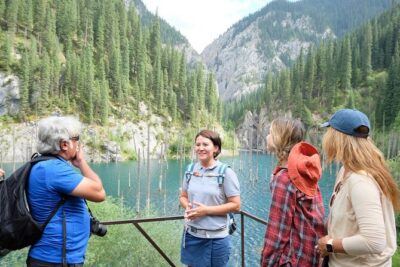 ★ 5.0Kolsai Kaindy Lakes with Charyn Canyons Day Tour (lunch included)From $57292 reviews
 ★ 4.8Kolsai & Kaindy Lakes with Charyn Canyon Day TourFrom $57198 reviews
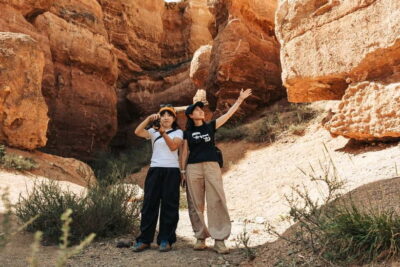 ★ 4.52-Day Tour to Kolsai-Kaindy Lakes and Charyn CanyonFrom $105196 reviews
 ★ 4.8Lake Issyk with Turgen Waterfall Day TourFrom $32127 reviews
 ★ 4.8Big Almaty Lake Roundtrip Transfer and TourFrom $69110 reviews
 ★ 4.3Big Almaty Lake Tour with Optional HikeFrom $69109 reviews