
Reviewed · CITY TOURS
Private History Tour in the City of Kazakhstan
Astana tells its story in steel and stone. This private history tour in Nur-Sultan pairs major landmarks like Bayterek Tower and two standout mosques with real meaning behind Kazakhstan’s shift from a nomadic past to a digital, future-minded present.
I like the way the tour connects architecture to ideas, not just photos. I also love the built-in time inside key stops, especially Bayterek Tower with its wish tradition and the option to go inside Khan Shatyr if you want that extra hourglass-sized slice of modern design.
One thing to watch: the schedule is tight for a 3-hour experience. Some admission is included, but not all sites, and Kazakh food (lunch or dinner) is an optional add-on, plus the whole outing works best with good weather.
In This Review
- Key highlights worth circling
- Bayterek Tower: the Tree of Life symbol and a wish you can do fast
- Khan Shatyr and the futuristic side of Astana under one roof
- Independence Square and the 1991 monument: freedom turned into stone
- The Pyramid of Peace and Reconciliation, plus big cultural wayfinding
- National Museum’s iceberg shape and the story from ancient to modern
- Hazret Sultan Mosque: faith tied to Khoja Ahmed Yasawi
- Triumphal Arch and the energy of “future forward” symbolism
- Museum of Energy of the Future: eight levels of alternative power
- Astana Grand Mosque, opened in 2022: modern Central Asia at full scale
- Saksaul food stop: what you get, and what you pay extra for
- Price and value for $100 per person in a private format
- Timing, weather, and how to get the best day
- Who this private history tour is best for
- Should you book this Nur-Sultan private history tour?
- FAQ
- How long is the private history tour in Nur-Sultan?
- What is the price per person?
- Is pickup included?
- Are tickets included for all stops?
- How many people are on the tour?
- What languages does the guide speak?
- Is Kazakh cuisine included?
- Does the tour include bottled water?
- Is the tour dependent on weather?
- What is the cancellation policy?
Key highlights worth circling
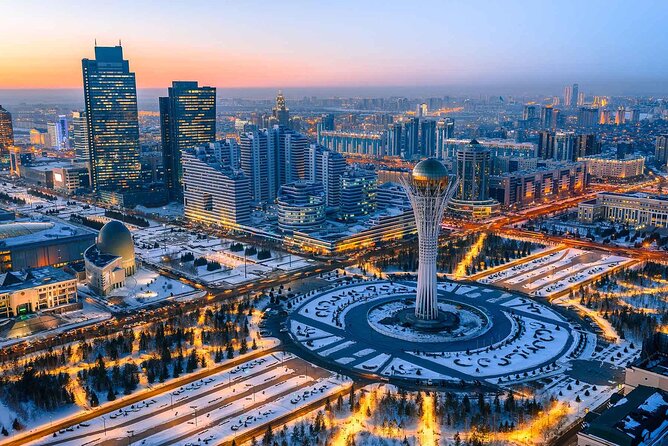
- Bayterek Tower, Tree of Life legend, and the handprint wish tradition with admission included
- Khan Shatyr by Norman Foster, with up to 30 minutes inside on request
- Big symbolism in public spaces, from Independence Square and the 1991 monument to Triumphal Arch
- A museum day inside one tour, including the National Museum and the Museum of Energy of the Future
- Two mosques in one route, including the newer Astana Grand Mosque (admission included)
- Optional Kazakh cuisine break at Saksaul, if you want the extra 1 hour 30 minutes
City tours in Nur Sultan that we have also written up
Bayterek Tower: the Tree of Life symbol and a wish you can do fast
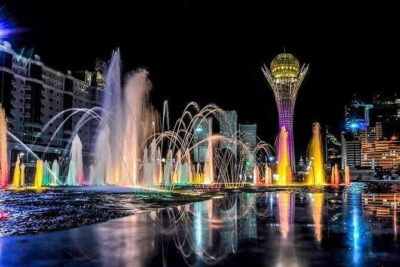
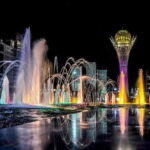
Most tours start with a random monument. This one starts with the city’s main story machine, Bayterek Tower. You’ll go inside, where the landmark is tied to the Tree of Life legend and national symbolism. The highlight is the First President N. Nazarbayev handprint area, where you make a wish.
Practical note: you get about 30 minutes here, and the admission ticket is included. That means you can do the main ritual and still have energy left for the rest of the route, instead of getting stuck in lines or wandering too long.
If you care about context, this stop does a smart job. It frames Kazakhstan’s development as something ongoing, not something stuck in the past. It’s a useful “map in your head” before you move into the modern, futuristic sights later.
Khan Shatyr and the futuristic side of Astana under one roof
After Bayterek, the tour turns more modern and more playful. Next comes Khan Shatyr, often described as the biggest Shatyr in the world, designed by the British architect Norman Foster.
You can spend up to 30 minutes inside Khan Shatyr if you request it. That timing matters. If you go in, you’ll get that wow-factor of walking through a massive structure built for comfort in a harsh climate. If you skip it, you still get the exterior and the story, just with less time pressure.
Then there’s a photo-focused stop at a theater with impressive facades. It’s not about sitting and studying. It’s about catching the angles that make Astana look like it planned the future with a ruler.
Tip for your planning: if you’re a photographer or just like clean lines, save your best attention for this stretch. The facades and the futuristic architecture are where Astana looks most cinematic.
Independence Square and the 1991 monument: freedom turned into stone
Now you shift into national memory and government-era symbolism. Independence Square and the Kazak Eli monument are dedicated to Kazakhstan’s independence and freedom and sovereignty themes.
Here’s what you should notice: the Kazak Eli monument is 91 meters tall, and that height symbolizes the year of independence, 1991. It’s one of those design choices that feels “obvious” once you know it, and “brilliant” once you see it in person.
This stop is timed at about 15 minutes, and admission is not included. That’s normal for outdoor public monuments, but it does mean you won’t get extra interior time here unless your guide builds it in.
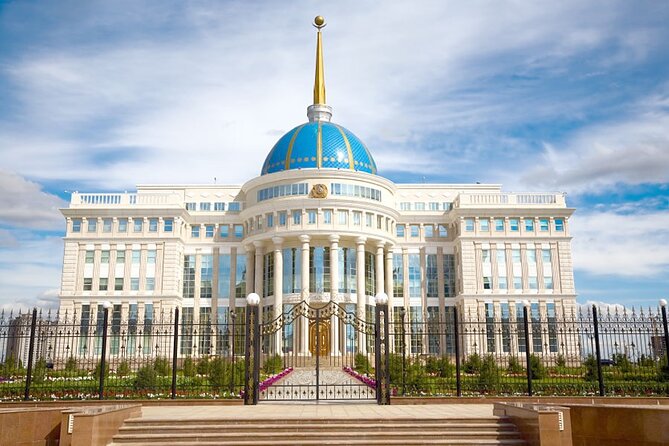
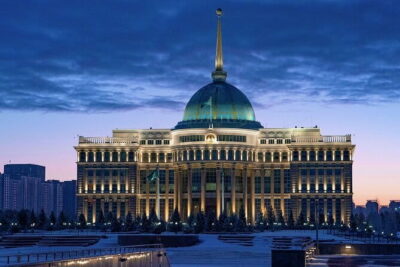
Nearby is the Palace of Independence, described as a main place for official government meetings, forums, and conferences. Even if you cannot see operations inside, the point is to show you how the country presents itself, locally and to the world, through spaces built for authority and decision-making.
The Pyramid of Peace and Reconciliation, plus big cultural wayfinding
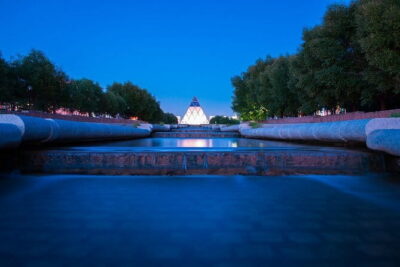
You’ll also pass the Palace of Peace and Reconciliation, built prior to the first Congress of the Leaders of World Religions and Traditions in 2006. It’s also known as the Pyramid because of its shape.
This stop works best if you pay attention to the intention, not the gimmick. Kazakhstan is presenting itself as a meeting point for different faiths and traditions, at least in its public messaging. The building’s unusual form helps it do that job fast, even if you only spend moments there.
Then the route moves toward the big cultural anchor: the National Museum of the Republic of Kazakhstan. The museum is described as the biggest in Central Asia, opened in 2014, and shaped like an iceberg. That shape matters as a metaphor, with the idea that there’s more below the surface than you see at first glance.
National Museum’s iceberg shape and the story from ancient to modern
At the National Museum, you get a major context reset. The museum covers Kazakhstan’s history, culture, and traditions from ancient times to modern life, and it’s designed to feel like a single large statement in the middle of the city.
The iceberg concept is an easy way to explain what you are doing here. You are not just collecting facts. You are seeing a framework for how modern Kazakhstan tells its own story.
Admitting this: if you only have a short time inside, museums can feel like speed reading. But this tour is built to give you direction. You’ll have the guide to help you know what to look for so you don’t end up staring at labels like they’re written in alien code.
If you love museums, you’ll probably want more time than this route can provide. If you don’t, the museum stop still gives you a strong sense of scale and design, which helps the rest of the day make sense.
Hazret Sultan Mosque: faith tied to Khoja Ahmed Yasawi
Next comes Hazret Sultan Mosque, constructed at the initiative of the First President and dedicated to the Holy Sultan, Khoja Ahmed Yasawi. Yasawi is described as a philosopher and religious enlightener, which gives this stop a deeper meaning than just sightseeing.
The mosque is noted for having the biggest dome in the world. Even if you do not spend a long time here, the dome is the kind of feature you remember. It visually reinforces the theme of the day: Kazakhstan building big statements, both spiritually and nationally.
This is also a strong place to slow down for a minute. Public buildings like this can feel like they belong to another era. The tour helps you understand why they belong to the present too.
Other private departures in Nur Sultan from our reviews

Triumphal Arch and the energy of “future forward” symbolism
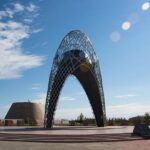
The Triumphal Arch is framed as a symbol of prosperity and endless aspiration toward the bright future. It’s dedicated to the 20th anniversary of Kazakhstan’s independence.
This is one of those stops where it helps to read the meaning before you take the photos. You are not only looking at architecture. You are looking at how the country marks milestones and pushes them into the city’s visual language.
The practical side is that this is mostly a look and a quick narrative moment, not a long timed admission stop. That makes it a good fit in a 3-hour route where you still want to cover major variety without burning time.
Museum of Energy of the Future: eight levels of alternative power
One of the most interesting parts of the day is the Museum of the Energy of the Future. It was established in 2017 and also served as the pavilion of Kazakhstan at Astana EXPO 2017.
You’ll hear the main idea fast: the museum has 8 levels, each represented by alternative energy types, including things like kinetic and water energy, plus wind and green themes. That range is useful because it prevents the museum from feeling one-note.
The real value here is the storyline the tour is trying to tell you. Kazakhstan’s identity is not only about tradition and independence. It is also about engineering, systems thinking, and future solutions.
If you enjoy science exhibits but hate wasting time, this is a nice compromise. It’s future-focused without demanding that you become a power plant expert before you enter.
Astana Grand Mosque, opened in 2022: modern Central Asia at full scale
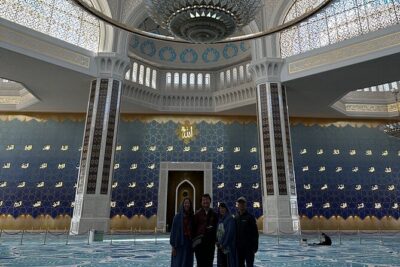
Then you reach another big visual anchor, the Astana Grand Mosque, opened in August 2022. It’s described as the most spacious mosque in Central Asia, with the largest dome, and it uses modern construction solutions.
This stop includes admission and is timed at about 20 minutes. For a short tour, that is a meaningful amount of time. It’s enough to see the core features and take in how the space feels, not just pass by it like a drive-by.
This is also where the tour’s “past meets present” theme becomes concrete. The day already walked you through nomadic roots and national independence symbolism. Now you see what “present and future” looks like in a place built for worship and community.
If you want to avoid any disappointment, keep this in mind: some earlier tour versions focused less on this newer mosque. In the version you are considering here, Astana Grand Mosque is part of the plan with admission included, so you are not left wondering if it got cut.
Saksaul food stop: what you get, and what you pay extra for
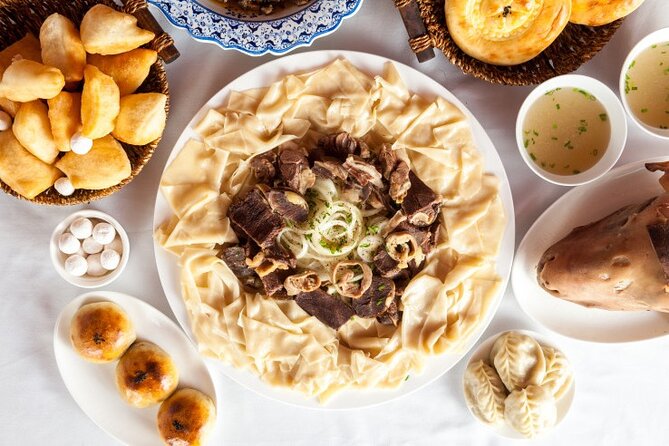
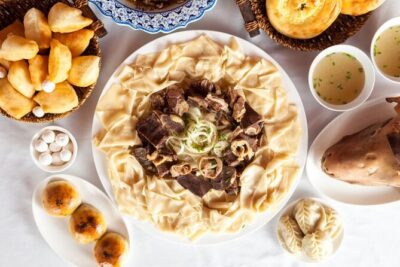
At the end, you can add a Kazakh food meal at Saksaul, timed at 1 hour 30 minutes. The tour description is clear: Kazakh cuisine (lunch or dinner) is not included in the price. It can be available upon extra payment.
This is a good option if you want the history day to turn into a full cultural day. Kazakhstan’s food is shaped by the nomadic lifestyle, and that angle is exactly what you want after you’ve been thinking about tradition and adaptation all afternoon.
But if you have a tight schedule or you already planned where to eat, you can skip this add-on and keep the tour moving.
Price and value for $100 per person in a private format
At $100 per person for about 3 hours, the value comes from what is included: private transportation, bottled water, entrance fees, and a professional English/Russian speaking guide.
Private transportation matters here. Nur-Sultan can feel spread out, and moving with a guide means you spend more time at the stops and less time figuring out routes. Bottled water is one of those small details that keeps the day comfortable, especially if the weather is not ideal.
Entrance fees are included, but with a caveat. Some stops note admission is included, others do not. For example, Bayterek Tower and Astana Grand Mosque specifically include admission tickets, while Independence Square is listed as admission ticket not included. So your out-of-pocket costs might be a bit higher if you want every site’s interior access at full capacity.
Food is the other variable. The Saksaul meal is optional and costs extra. If you want “one price, no decisions,” you’ll either plan to eat elsewhere or budget for the add-on.
Overall, this tour is priced like a true guided sampler: major sights, timed entries where it counts, and enough narrative to make the buildings feel like a story instead of random stops.
Timing, weather, and how to get the best day
This experience requires good weather. That makes sense because you’ll do multiple exterior monument and architecture moments. If it’s raining or extremely cold, you can still see things, but you’ll probably feel rushed and less inclined to linger.
You’ll also want to think about your pace. A 3-hour private tour is efficient. It’s not meant for slow wandering with coffee every 12 minutes. If you like to linger, you might do best by choosing which interior stop matters most to you, like Khan Shatyr.
For start times, the listed hours show Monday 10:00 AM to 9:00 PM, and the experience is shown as available across dates from 10/29/2021 to 06/17/2026. Because only Monday hours are stated, I recommend checking your exact day and start time during booking.
Who this private history tour is best for
This fits best if you want a guided “big picture” in a short window. It’s also ideal if you like variety: towers, futuristic architecture, mosques, museums, and a science-based exhibit all in one afternoon.
It’s also smart for anyone who wants a private format. It’s stated as private, so only your group participates. That usually means you can ask more direct questions, and your guide can adjust the pacing.
Most travelers can participate, and service animals are allowed, so it’s flexible for a range of visitors.
If you are the type who wants one or two sites in depth, you may still enjoy this, but you’ll likely want a longer follow-up day at the National Museum or a second visit to your favorite mosque.
Should you book this Nur-Sultan private history tour?
I’d book it if you want a fast, guided route through Astana’s identity. Bayterek Tower sets the tone. Khan Shatyr adds future-shaped design. Then you layer in independence symbolism, two mosque stops, and museums that explain how Kazakhstan frames its past and its next steps.
I would hesitate only if you hate time limits and want long, unhurried interior visits. This tour is built to cover a lot, and you will be moving.
If you can handle a structured 3-hour window, this is good value for a private guide and multiple major stops, with admissions handled for the big ticket items like Bayterek Tower and Astana Grand Mosque.
FAQ
How long is the private history tour in Nur-Sultan?
The tour is approximately 3 hours.
What is the price per person?
It’s listed at $100.00 per person.
Is pickup included?
Pickup is offered, and private transportation is included.
Are tickets included for all stops?
Not all stops include tickets. Bayterek Tower admission is included, and Astana Grand Mosque admission is included. Independence Square is listed as admission ticket not included, and other sites are not clearly stated as included or excluded.
How many people are on the tour?
It is a private tour, so only your group participates.
What languages does the guide speak?
The guide is listed as professional English/Russian speaking.
Is Kazakh cuisine included?
Kazakh cuisine at Saksaul (lunch or dinner) is not included. It can be available upon extra payment.
Does the tour include bottled water?
Yes, bottled water is included.
Is the tour dependent on weather?
Yes, the experience requires good weather. If it’s canceled due to poor weather, you’ll be offered a different date or a full refund.
What is the cancellation policy?
You can cancel for a full refund up to 24 hours in advance of the experience’s start time, and cancellation is free.
More Reviewed Tours Around Nur Sultan
- Astana City Tour: Private Full Day with Lunch and Comfort Pickup★ 5.0 · 98 reviews
- Private Half-Day City Tour of Astana in Comfort★ 5.0 · 46 reviews
- Half-Day Tour ( 4 hours)★ 5.0 · 25 reviews
- Full Day (6 hours) City Tour in Astana★ 3.5 · 22 reviews
- Astana: KarLag and Karaganda – Private USSR history tour★ 5.0 · 21 reviews
- Astana City Tour: Authentic Private Full Day with Lunch + Pickup★ 5.0 · 19 reviews
More Private Departures Reviewed in Nur Sultan
- Astana City Tour: Private Full Day with Lunch and Comfort Pickup★ 5.0 · 98 reviews
- Private Half-Day City Tour of Astana in Comfort★ 5.0 · 46 reviews
- Astana: KarLag and Karaganda – Private USSR history tour★ 5.0 · 21 reviews
- Astana City Tour: Authentic Private Full Day with Lunch + Pickup★ 5.0 · 19 reviews
- Private Yurt Tour with Horses: Immerse into Kazakh Culture★ 5.0 · 16 reviews
- Guided Night Time Tour of Astana in a Private Car★ 5.0 · 8 reviews
Further City Tours Reviewed in Nur Sultan
- Astana City Tour: Private Full Day with Lunch and Comfort Pickup★ 5.0 · 98 reviews
- Private Half-Day City Tour of Astana in Comfort★ 5.0 · 46 reviews
- Full Day (6 hours) City Tour in Astana★ 3.5 · 22 reviews
- Astana City Tour: Authentic Private Full Day with Lunch + Pickup★ 5.0 · 19 reviews
- Astana Unveiled: A City Comfort tour with Lunch and Winetasting★ 5.0 · 14 reviews
- Half Day (3 hours) City Tour★ 5.0 · 6 reviews
What we reviewed in Nur Sultan most recently




City Tours, every option.
 ★ 4.8Big Almaty Lake Roundtrip Transfer and TourFrom $69110 reviews
 ★ 5.0Astana City Tour: Private Full Day with Lunch and Comfort PickupFrom $14998 reviews
 ★ 5.0Astana City Tour: Explore Night City with a Certified GuideFrom $4990 reviews
 ★ 4.5City Tour with Cable CarFrom $4585 reviews
 ★ 5.0Private Full Day Almaty City TourFrom $20054 reviews
 ★ 4.8City Highlights Walking Tour with Chocolate ShopFrom $2034 reviews
 ★ 4.8City Tour with Mountain VisitFrom $15026 reviews
 ★ 5.0Almaty Original City TourFrom $13722 reviews
This tour also sits in